Qatar is moving fast on e-invoicing — and the next seven months will decide how ready businesses are when it becomes mandatory.
In May 2026, two events landed within days of each other, signaling that e-invoicing in Qatar has shifted from “someday” to “now.” On 6 May, the Qatar Cabinet approved the draft e-Invoicing law and its executive regulations. Then, on 18 May, the General Tax Authority (GTA) held an onboarding session kicking off the live Pilot Phase of its National E-Invoicing Program. If your business operates in Qatar, here’s what’s happening, why it matters, and what you should be doing right now.
The Ministry of Finance, working with the GTA, has secured Cabinet approval for the draft law governing electronic invoicing. The full text and technical details haven’t been published yet, but the direction is clear and consistent with what’s already played out in neighboring Gulf countries like Saudi Arabia, the UAE, and Oman. Based on those precedents and early signals, businesses should expect:
This is the regulatory green light. The next question is: what does compliance actually look like in practice? That’s where the GTA’s pilot program comes in.
The GTA’s program is a strategic push to bring Qatar’s invoicing infrastructure into one consistent, digital system. It’s built around three goals: making it easier to do business by automating and standardizing invoicing, giving the government real-time data to support policy-making, and improving tax compliance while reducing fraud and audit burden.
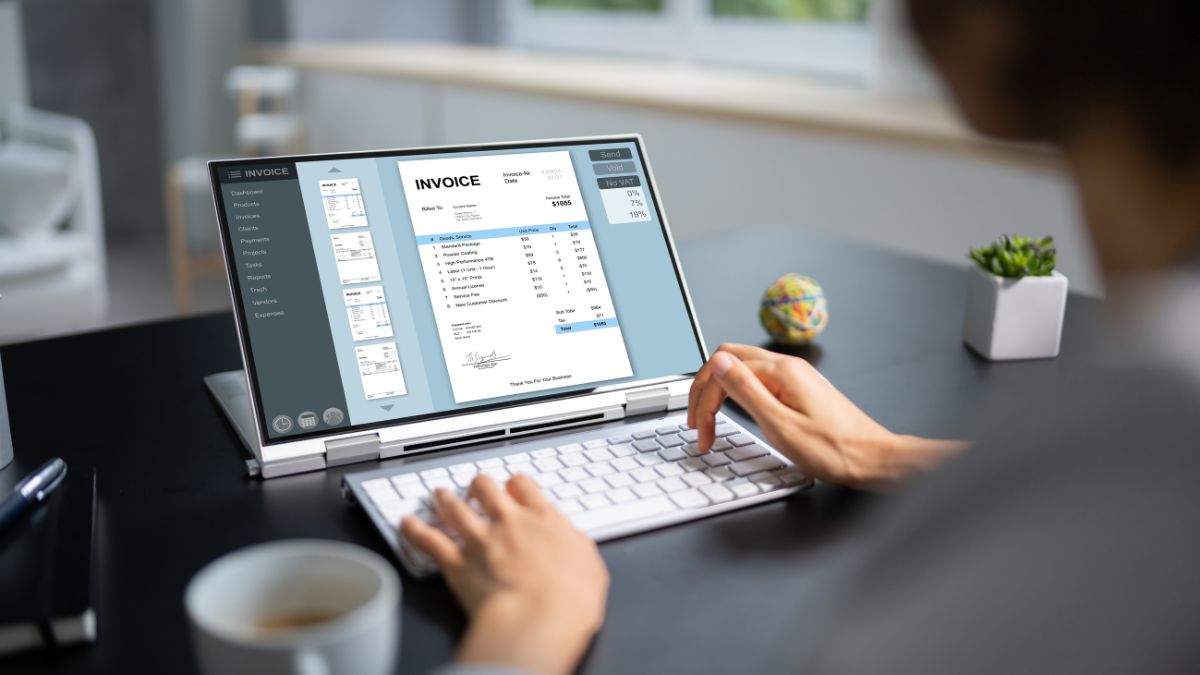
Practically, this means every qualifying invoice, credit note, and debit note will need to exist as a structured, machine-readable electronic document — not a PDF, scanned image, or HTML email. A PDF invoice or a JPG of a paper receipt simply won’t count as a valid e-invoice under the new regime.

A central design feature of the system is that it supports two distinct ways of getting invoices validated by the government.
The Reporting Model: the seller and buyer exchange the invoice directly, and the seller reports it to the GTA’s Central Platform after the transaction is complete. Validation isn’t a prerequisite for issuing the invoice — it happens after the fact. For the pilot, this applies to simplified invoices.
The Clearance Model: the invoice must be submitted to and validated by the GTA’s Central Platform before it can be shared with the buyer. Validation is a hard dependency here. For the pilot, this applies to standard invoices.
Which model applies to a given transaction will ultimately be defined by the official law once it’s published — but notably, pilot participants are required to test both models, suggesting Qatar’s system, like Saudi Arabia’s, may end up using a hybrid approach depending on transaction type.
To help businesses integrate, the GTA is providing a free Software Development Kit (SDK) available in five languages: Java, .NET, Python, Node.js, and PHP. The SDK handles the heavy lifting — generating, signing, and validating e-invoices, managing QR code generation and stamping, and handling secure communication with the Central Platform. There’s also a GTA-hosted free e-invoicing solution for businesses that don’t want to integrate at the system level, plus an Entity Admin Portal for onboarding, renewing, and offboarding invoicing devices.
The pilot phase, running from February through June 2026, is explicitly a controlled validation exercise — not a dress rehearsal for going live. Participants test in the GTA’s live environment but are required to use dummy data, never production or personally identifiable information. The goals: confirm the SDK and Central Platform API actually work inside real business systems, validate that required data fields (per GTA’s data dictionary) are realistically available in day-to-day operations, and surface friction points before the rules are locked in.
This is a meaningful opportunity. Participants get early access to the system design before it’s mandatory, extra time to align internal processes, a chance to validate integration feasibility against their actual tech stack, and a direct channel to influence the final framework through structured feedback.
The Timeline: Mark Your Calendar
Date | Milestone |
18 May 2026 | Onboarding session (where this all kicked off) |
20 May 2026 | Technical walkthrough sessions begin |
18 May – 30 June 2026 | Weekly clarification sessions for participants |
20–30 June 2026 | Structured pilot feedback due to GTA |
January 2027 | Targeted countrywide mandatory rollout (subject to the official law and regulations being finalized) |
That leaves roughly seven months between the end of the pilot and the expected go-live — a tight but workable runway if preparation starts now rather than later.
What Businesses Should Be Doing Right Now
Whether or not you’re part of the official pilot, the writing is on the wall. A few concrete steps make sense at this stage:
Qatar isn’t just discussing e-invoicing anymore — it has a Cabinet-approved legal framework and a live, running pilot with a real technical architecture, a working SDK, and a defined path to a January 2027 mandatory rollout. Businesses that engage early, whether through the pilot or through their own internal readiness work, will have a real head start over those who wait for the law to be finalized before asking questions. Given how quickly Saudi Arabia, the UAE, and Oman moved through similar transitions, “wait and see” is likely to be the more expensive strategy here.
Adding {{itemName}} to cart
Added {{itemName}} to cart